
- Call Today +91 75388 27778
- Open Hour 09:00 AM to 09:00 PM
 lung care
.
If you have been told you need to have a bronchoscopy you might have questions about what the procedure's why it is needed and what happens after. Bronchoscopy is a procedure that lets a doctor look inside the airways and check the lungs. It can help doctors find out why someone is having trouble breathing and other problems with the lungs.
In this article we will explain the bronchoscopy procedure, the uses of bronchoscopy how to prepare for bronchoscopy the risks of bronchoscopy and what to expect during the recovery from bronchoscopy, in words.

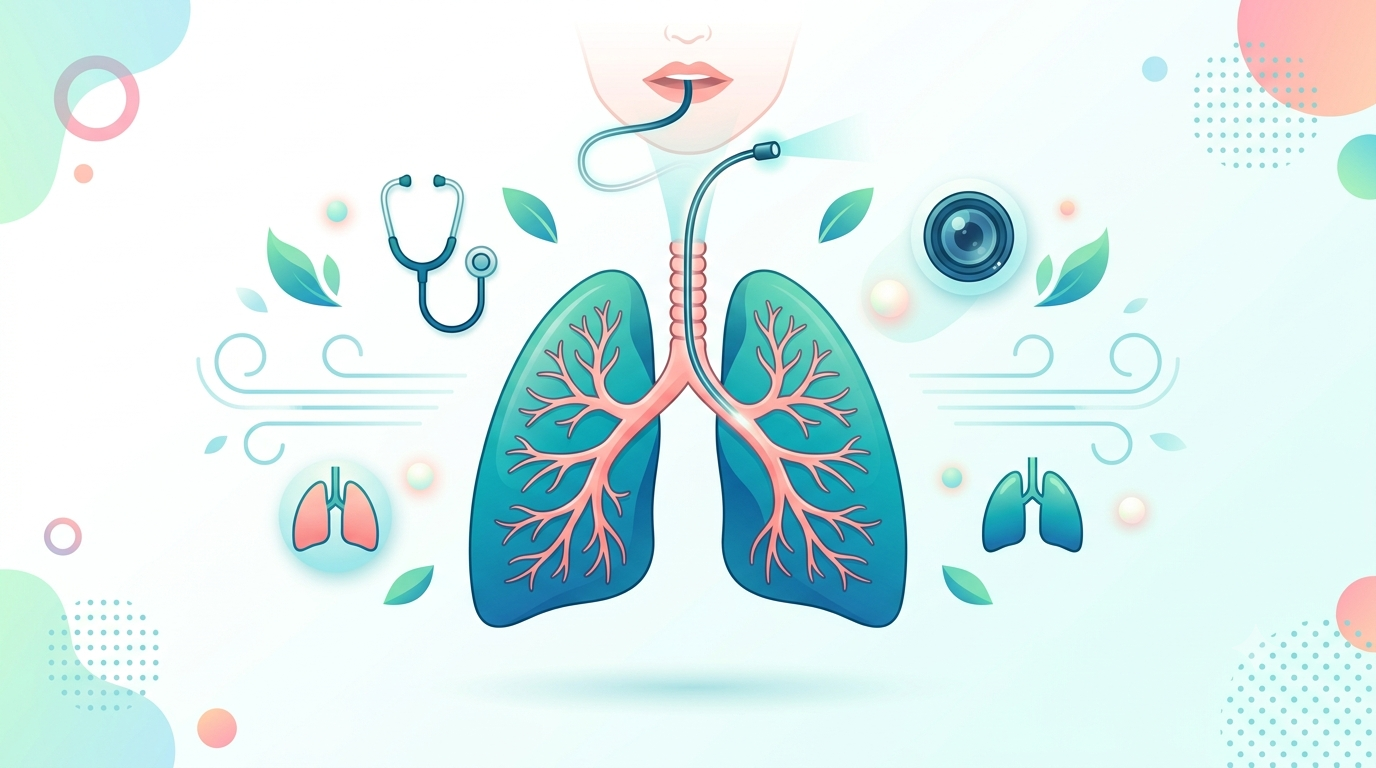
Bronchoscopy is a procedure used to examine the inside of the airways and lungs. A thin medical tool called a bronchoscope is used for this test.
The bronchoscope is usually a tube that has a light and a camera at the end. It is gently passed through the nose or mouth. The object moved into the throat and, into the tubes.
The camera is used by the pulmonologist to examine the airways and find any changes.. If needed the doctor might also take a tissue or fluid sample during the test for checks.
A doctor might suggest bronchoscopy if other tests, such as an X-ray or CT scan show a problem, in the lung or airway.
Some common reasons, for performing bronchoscopy include:
Finding the cause of a persistent cough
Investigating unexplained breathing problems
Checking for a lung infection
Finding the cause of blood in the sputum
Examining an abnormal area seen on a scan
Checking for an airway blockage
Taking a tissue or fluid sample, for laboratory testing involves collecting an amount of material from the body. This sample is then sent to a lab to be analyzed. The results help doctors figure out what might be wrong. Tests can be used to check for infections, diseases or other health problems. Common tests include blood tests, urine tests and biopsies. The test process is usually quick and safe. People might feel a pinch or some mild discomfort during tests. The discomfort, from tests goes away quickly. The lab team takes care with the sample to make sure the results are correct.
Helping diagnose certain lung diseases
Removing mucus or other material that blocks an airway
During a bronchoscopy a doctor will use a tube that is called a bronchoscope. This tube helps the doctor to look inside the airways of the lungs. Usually a pulmonologist or another doctor who has training, in lung conditions will perform the bronchoscopy. Before the bronchoscopy starts the healthcare team will explain every step to you. Review your history carefully to make sure that bronchoscopy will be safe, for you. The bronchoscopy team will look after you every step of the way.
Depending on the kind of bronchoscopy you might get anesthesia to numb your throat. You might get sedation so you can relax and stay comfortable. The bronchoscopy procedure can be easier.
You might feel some pressure or a tickling sensation, during the bronchoscopy. The bronchoscopy team will help you stay calm. You should not feel pain. The doctor will use the bronchoscope to check for problems collect tissue samples or remove blockages if needed. The whole process usually takes, between 15 and 30 minutes. Afterward you will. Recover while the effects of the sedation go away. You might feel a throat or hoarseness for a short time but these feelings usually disappear quickly. The bronchoscope is then gently put through the nose or mouth. Guided into the airways.
The doctor can view the tubes and other parts of the respiratory system through the camera. If needed the doctor may collect a sample of tissue, mucus or fluid for testing.
After the examination is completed the bronchoscope is carefully removed.
The bronchoscopy procedure itself may not take long but the total time, at the hospital or medical facility can be longer because of preparation and recovery.
There are different types of bronchoscopy. The most common types include flexible and rigid bronchoscopy.
A flexible bronchoscopy is done with an bendable tube that can travel through the airways. This method is often used to look at the tubes and take samples when it is necessary.
Rigid bronchoscopy uses a straight tube. Rigid bronchoscopy could be suggested when a bigger tool is needed. Your doctor will choose the type of bronchoscopy for you. They will look at your health condition. What the test needs to achieve.
You must follow your doctors instructions to prepare for the bronchoscopy. Your medical team might ask you not to eat or drink for a hours, before the test. This is to reduce the risk of complications while you are sedated or asleep.
Medicines you are currently taking
Any known allergies
Previous reactions to anesthesia
Existing medical conditions
Medicines that may affect bleeding
I never stop taking medicine that a doctor has prescribed unless a doctor specifically tells me to stop.
If I plan to have sleeping medicine I might need someone to take me home after the procedure.
I follow the instructions that the hospital or doctor gives me because the prep steps can differ.

Many people worry that a bronchoscopy will be painful.
I understand that you might feel anxious, about the bronchoscopy.
Bronchoscopy procedures usually use medicine to make the bronchoscopy more comfortable.
During or after the bronchoscopy you may feel pressure, coughing, throat irritation or mild discomfort.
These feelings, from the bronchoscopy normally fade after some time.
If you start to feel uncomfortable during the bronchoscopy let the medical team know.
The medical team can give you support or medication during the bronchoscopy whenever you need it.
After the bronchoscopy you may be watched for a while until the effects of sleeping medicine or anesthesia wear off. Some people may experience:
A mild sore throat
Temporary coughing
Mild hoarseness
Tiredness after sedation
Small amounts of blood in sputum especially if a biopsy was taken
These symptoms can be different for each person.
Your doctor will let you know when you can eat, when you can drink, when you can drive and when you can get back to your activities. If sedation was used you might be told not to drive for a time.

Bronchoscopy recovery is usually simple, for people. How long it takes to recover can depend on the type of procedure. If a biopsy was done that can affect recovery time. Your overall health also plays a role. It is important to rest It is also important to follow the instructions given by your healthcare team. Taking care of yourself means listening to what the doctors and nurses tell you. If a tissue or fluid sample was taken the results might take some time because the sample might need to be checked in a laboratory. Your doctor will tell you when and how you will get the results.
Like any treatment bronchoscopy has some possible risks. Your doctor will explain these risks before the procedure
Severe difficulty breathing
Significant or increasing blood in the sputum
Severe chest pain
High or persistent fever
Other symptoms that your doctor has specifically mentioned to you
Knowing the details of bronchoscopy such as how it's performed why it is used how to prepare, what risks exist and how to recover can make patient feel more ready, for the test. I hope this information helps you feel less uneasy. If doctor has recommended bronchoscopy patient talks to doctor about worries. Follow the instructions from healthcare team, for preparation and recovery.
Follow the instructions that your health care team gives you when you are leaving the hospital. Make sure listen to everything they tell you. Pay attention to the directions they give. Take your time. Do not rush. Remember to follow the guidance, from your health care team. Always follow the instructions given by your health care team.
Bronchoscopy is a test that allows doctors to look inside your airways and lungs. Bronchoscopy helps doctors find out why you cough or have difficulty breathing or notice blood in your sputum. Bronchoscopy also enables doctors to collect samples when necessary. I know that thinking about a doctor looking inside your lungs can be scary.
Your journey to a healthier happier life starts here.
Schedule a Consultation

© 2026 GMC Multispeciality Clinic. All Rights Reserved.
Designed by Digital SWOT